
Search
- When it's useful
- The default for most accounts with clear, searched-for services.
- Intent it captures
- People actively typing what they need into Google.
- What to measure
- Calls, form fills and bookings by campaign and search term.

Adlyvo builds Google Ads around high-intent searches, with keyword and search-term control, call and form tracking, a landing page that matches the ad, and ongoing optimisation from real conversion data.
Different searches carry different intent. Treating them the same wastes budget on the wrong searches.
Someone already looking to hire or buy, comparing options.
Location matters as much as the service itself.
Kept apart from adjacent services so budget follows what you actually want.
Time-sensitive. Needs a fast call path more than a long page.
Not every account needs every campaign type. This is what each one is for.


Performance is not just the ad — every step between the search and the tracked outcome affects whether budget produces real enquiries. Not every account receives every step below in the same order or scope.
See what exists today before anything changes.
Map how people actually search for what you offer.
Built around intent, not one broad account.
Copy and assets that match the search behind the click.
Calls, forms and bookings tested before launch.
Campaigns go live once structure and tracking are in place.
Ongoing review of what is actually being searched.
Spend follows what the data shows is working.
Enquiries reviewed for fit, not just counted.
In short: Search → Ad → Landing page → Call / form → Qualified lead.
Loose match types pull in clicks with no real intent behind them.
How Adlyvo helps: Search terms are reviewed and negatives applied against confirmed waste.Unrelated terms sharing one ad group weaken every ad in it.
How Adlyvo helps: Ad groups are kept tight, so the keyword, ad and page stay related.The same irrelevant searches keep spending budget every day.
How Adlyvo helps: Negative keyword lists are built and expanded from real search-term data.Clicks arrive from places you do not serve.
How Adlyvo helps: Location targeting reflects where you can realistically do the work.It becomes impossible to see which service is actually worth the spend.
How Adlyvo helps: Priority services get their own campaign and budget.A click for one service lands on a page about everything you do.
How Adlyvo helps: Each priority service gets a matching landing page.Budget optimizes toward clicks or page views instead of real enquiries.
How Adlyvo helps: Calls and forms are set up and tested as the conversion actions that matter.The same verified results shown on the Case Studies page, from the ad accounts they came from.
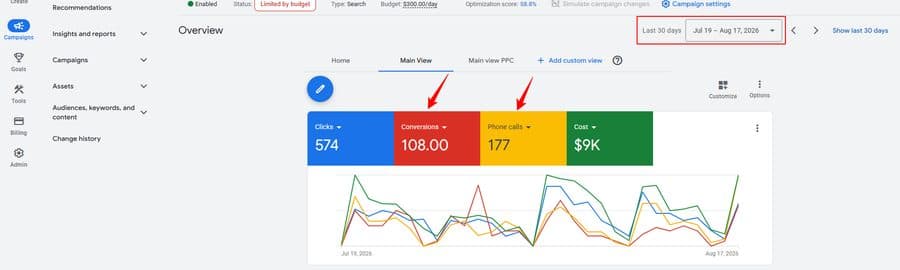
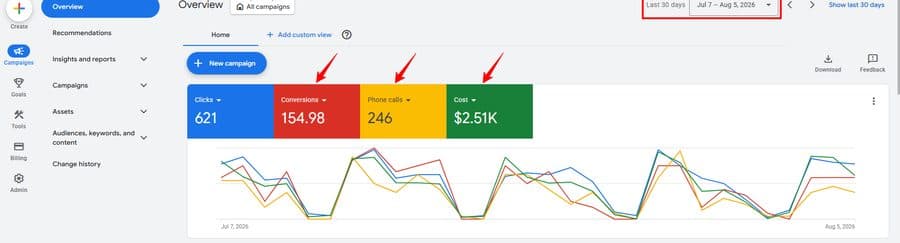
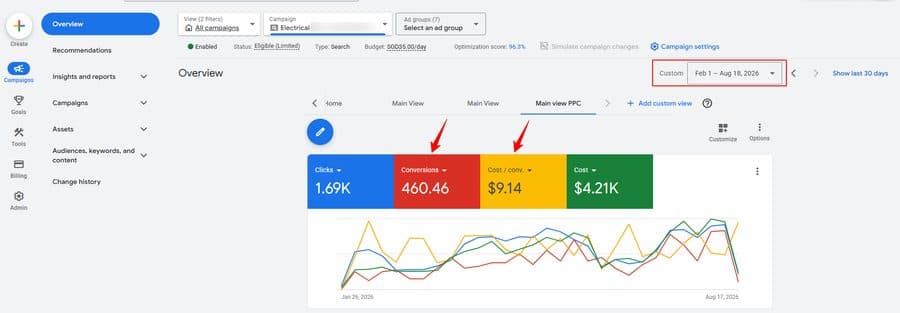
Search-term review and account-level targeting both shape whether budget reaches the right searches.
No account can block every irrelevant search perfectly, so this is an ongoing review. Where, when and how the ad is allowed to show matters just as much:

A click that promised one thing should land on a page about that exact thing.
Tracking helps show which campaigns and searches produce real actions, not just traffic.
We cannot promise perfect attribution across every channel and device. The goal is trustworthy data you can act on.
Explore Conversion Tracking →
Results depend on your market, competition, offer and follow-up. We do not promise fixed outcomes.
There is no universal number. It depends on the factors below, and we review them before recommending a budget. Ad spend is separate from management and goes directly to Google.
We do not quote a universal cost per lead or a timeline. Early work is about learning which searches bring the right enquiries.
Campaigns follow how people actually search, not one broad account.
Search terms are reviewed and negatives applied against confirmed waste.
Conversions are tested so bidding learns from real enquiries, not clicks.
Enquiries are reviewed for fit, so quality is visible, not just volume.

Founder & Owner
Ahasan focuses on helping businesses turn paid traffic into measurable leads. That means Google Ads built around real search intent, accurate call and form tracking, and lead-generation systems judged on real enquiries, not just clicks.
Meet the ownerThere is no universal number. It depends on your market, how competitive the search terms are, the value of a customer, and how many locations or services you advertise. We review these before recommending a budget, and ad spend is separate from management. Pricing for setup and management is shown on this page.
We cannot promise a timeline. Campaigns can start receiving clicks once they are live, but learning which searches produce good enquiries takes time and depends on budget, competition and how well conversions are tracked. Early work focuses on the searches most likely to matter.
Common causes are broad or mixed-intent targeting, irrelevant search terms, a landing page that does not match the search, or conversions that count the wrong action. An audit checks search terms, structure, conversion actions and the page to show where the leak is.
Yes. Work usually starts with an audit of the current structure, search terms, conversion actions and settings, so you can see what is working before anything changes.
Calls, forms and bookings are set up as conversion actions, so Google Ads learns from real lead actions. The exact call tracking options depend on your phone and website setup and are confirmed after the audit. Tracking has its own page if you need a deeper setup.
Most accounts start with a focused Search campaign, since it gives the clearest control over intent and search terms. Performance Max is added once Search is structured and tracking is trustworthy, for businesses that want broader reach.
Yes. Priority services and locations are typically structured into their own campaigns, so budget and performance stay visible by service and area rather than blended into one account total.
Adlyvo can review your search terms, campaign structure, tracking, landing experience and lead quality to find where Google Ads performance is breaking down.