Google Ads
Capture high-intent demandUsed where people are already searching for what you offer, so budget follows real purchase or enquiry intent instead of interruption.
Explore Google Ads →
Adlyvo uses Google Ads and Meta Ads where each one fits, chooses channels based on business intent, and connects conversion tracking, landing experience and lead or purchase quality so budget can move toward what is actually working.
Each piece does a different job. Performance Marketing is what ties them to one measurable outcome.
Used where people are already searching for what you offer, so budget follows real purchase or enquiry intent instead of interruption.
Explore Google Ads →Used to create or expand demand where audience, creative and offer can earn attention before a search ever happens.
Explore Meta Ads →A page built around the ad's exact promise and offer, with conversion performance reviewed as part of the campaign, not separately.
Explore Landing / CRO →One consistent conversion definition across channels, so performance can be compared instead of guessed at.
Explore Tracking / Attribution →Performance is not just the channel you choose — every stage between the business goal and the tracked outcome affects whether budget produces real results. Not every engagement uses every channel or every step below in the same order.
Confirm what the marketing system is actually trying to create.
See what exists today, across every active channel, before anything changes.
Calls, forms, bookings and purchases tested before decisions are made on them.
Confirm the offer and how it should reach the right people on each channel.
Built around each channel's role, not one identical setup copied across platforms.
Pages checked against the ad's promise and the offer.
Campaigns go live, or an existing account is restructured, once tracking is trustworthy.
Leads and purchases reviewed for fit and value, not just counted.
Spend is weighted toward what the data shows is working.
Channels, campaigns and pages are refined from real, tracked results.
In short: Business goal → Channel → Conversion → Quality → Budget.
Each platform is judged on its own dashboard, with no shared view of what actually worked.
How Adlyvo helps: Channels are connected to one conversion definition so they can be compared fairly.Spend is split evenly across channels instead of following what the business actually needs.
How Adlyvo helps: Budget is weighted toward the channel and campaign producing the strongest outcomes.Platforms learn from clicks or page views instead of leads or purchases.
How Adlyvo helps: Primary conversion actions are set to the outcomes that actually matter to the business.Reported conversions do not match what sales or fulfilment actually sees.
How Adlyvo helps: Tracking is tested against real leads and purchases before decisions are made on it.A strong ad loses people at a page that does not match its promise.
How Adlyvo helps: Landing experience is reviewed as part of the channel, not left to chance.Volume looks healthy while the enquiries underneath are the wrong fit.
How Adlyvo helps: Leads and purchases are reviewed for quality and fed back into channel decisions.Cheap clicks and high click-through rates can still produce the wrong outcome.
How Adlyvo helps: Budget follows conversion quality and business priority, not surface-level platform metrics.These are approved Google Ads results, the same channel evidence shown on the Case Studies page. We do not have approved cross-channel attribution figures to show, so these are examples of one channel's performance managed as part of a connected system, not a claim about combined results.
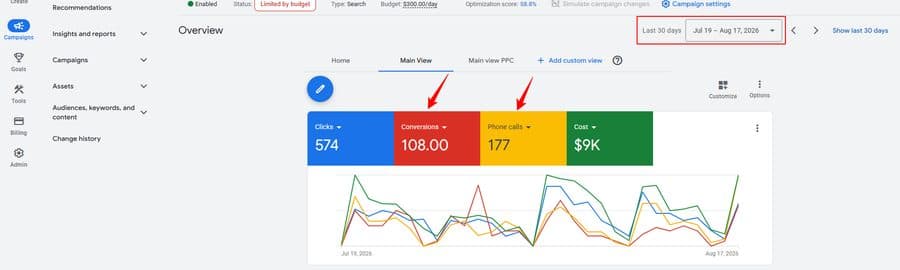
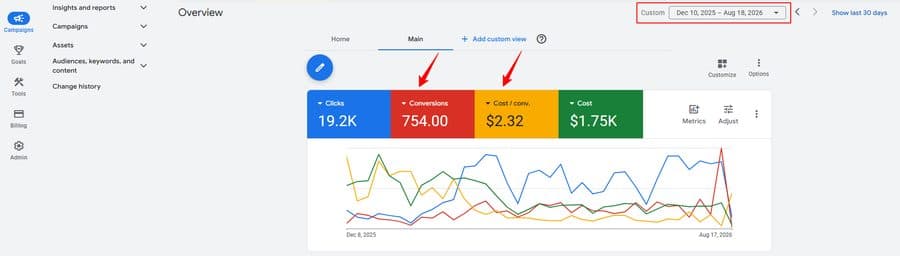
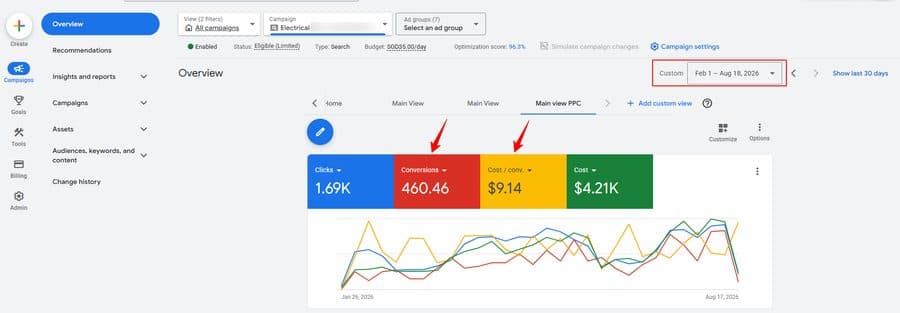
Budget should not simply move to whichever campaign has the cheapest clicks, the highest click-through rate or the most raw conversions. For service businesses that means calls, forms, bookings and qualified leads. For ecommerce that means purchases and conversion value where the data can be trusted.
We do not claim automatic, AI-driven budget optimisation across platforms, and we do not make attribution claims the tracking cannot support. Budget decisions are reviewed against these factors, not moved by an algorithm alone.
We review leads and purchases for fit and value. We do not promise revenue or signed clients.
Performance weakens when the page is irrelevant, the CTA is unclear, tracking is broken, or every action is treated equally.
The channel and creative or search term behind the click.
A page that matches the ad's exact promise.
The action the click was supposed to produce.
That action is measured, not assumed.
Fed back so channel and budget decisions use real outcomes.

Results depend on your channels, offer, market and follow-up. We do not promise fixed outcomes.
There is no universal number. It depends on the factors below, and we review them before recommending a budget. Ad spend is separate from management and goes directly to Google or Meta.
We do not quote universal CPC, CPL, CPA or ROAS benchmarks. Efficiency depends on how well these pieces work together.
Each channel is used for what it is actually good at, not run identically to every other one.
Channel and budget decisions are only trusted once the underlying tracking is validated.
Enquiries and purchases are reviewed for fit and value, so quality is visible, not just volume.
Spend follows calls, forms, bookings, qualified leads or purchase value, not clicks or CTR.

Founder & Owner
Ahasan focuses on helping businesses turn paid media into measurable outcomes. That means using Google Ads and Meta Ads where each fits, tracking that can be trusted, and budget decisions tied to lead or purchase quality, not just channel-level metrics.
Meet the ownerPaid media, tracking, landing pages and lead follow-up managed as one system, judged on outcomes such as calls, forms, bookings and sales instead of clicks.
No. You start with the part of the journey limiting qualified leads, measurement or growth, and add channels only when they make sense.
Decisions are based on the same conversion data across channels, so budget follows what produces leads instead of what reports the most activity.
Separate specialists each optimize their own metric. Here acquisition, measurement, conversion and follow-up share one definition of a valuable outcome.
Google Ads on its own captures existing search demand. Performance Marketing adds Meta Ads, landing experience, tracking and lead or purchase quality as one connected system, so budget can be compared and moved across channels, not just optimised inside one account.
Meta Ads on its own creates or expands demand through audience and creative. Performance Marketing sits above that, using the same conversion definitions across every active channel so Meta's results can be compared fairly against search or any other channel.
Yes. An account and tracking audit comes first, so existing channels, campaigns and conversion data are reviewed before anything is restructured, and useful history is kept rather than rebuilt from zero.
The signal differs by business model. Service businesses review leads for source, service requested, qualification and follow-up. Ecommerce accounts review purchases by product, campaign and value. Either way, the review feeds back into channel and budget decisions.
We cannot promise a timeline. Early work focuses on validating tracking and giving each channel's structure a fair chance, since budget decisions made on unreliable data usually cost more than the time spent getting it right first.
Not always, but it helps. Downstream lead or sales feedback makes it possible to see whether conversions became real opportunities, not just whether they were counted. Where that access is not available, the review works from the best available conversion data.
Adlyvo can review your channels, campaign structure, landing experience, conversion tracking and lead or purchase quality to identify where budget is being lost.